
Blog & Videos

They’ll Grow Out of It… But What If They Don’t?
It is one of those phrases that can sound reassuring at first—especially when you are an exhausted parent desperately hoping that the sleepless nights, digestive struggles, meltdowns, constant congestion, or developmental concerns really are just a phase.

The Brain-Gut Connection: How the Vagus Nerve Shapes Your Child’s Digestive Health
The brain-gut connection is a bidirectional communication network linking the central nervous system with the digestive system through neurological, hormonal, immune, and microbial pathways.

Your Child’s Immune System Is Listening to Their Nervous System
As parents, we have all been there. It is the middle of the night, and your child wakes up burning with a fever, coughing nonstop, complaining that their ear hurts, or struggling to breathe through another round of congestion.

Importance of Care Plan Consistency
We are going to be completely honest: you cannot expect your child to receive the full benefit of their chiropractic care plan if you do not follow it. That may sound direct, but your child’s care plan is not a random collection of appointments.

Tech Neck Is More Than Poor Posture: How Your Daily Habits Affect Your Nervous System
You finish the day with a stiff neck, tight shoulders, or a headache that seems to start at the base of your skull. You roll your shoulders, stretch your neck, or blame your desk chair—but the tension keeps returning.

What Comes After Active Care? Your Next Phase of Neurological Healing
Progressing through active chiropractic care is an exciting milestone. You may be sleeping better, handling stress more easily, experiencing fewer symptoms, or noticing that you or your child is calmer, more adaptable, and recovering more quickly when challenges come up.

Nervous System Regulation: The Foundation for Raising Resilient Kids
As a parent, you want your child to be able to handle whatever life brings their way. You want them to recover after getting sick, bounce back from everyday bumps and falls, work through disappointment, adapt when plans change, and move forward after a difficult day. That is resilience.

Teen Anxiety Is Rising: Looking Beyond the Behavior to the Nervous System
As a parent, watching your once-vibrant teenager become withdrawn, irritable, or constantly overwhelmed can be heartbreaking. You may feel like you are walking on eggshells, unsure whether to give them space, ask more questions, or step in and help. Maybe your teen is struggling at school, pulling away from friends, losing sleep, or worrying about things that never seemed to bother them before.

Why Kids With ADHD Can Feel Wired, Tired, and Completely Burned Out
Parents of children with ADHD often describe a confusing pattern. Their child seems to have endless energy, struggles to slow down, and moves quickly from one thought or activity to the next. Yet by the end of the day, that same child may be exhausted, emotional, irritable, or completely overwhelmed.

Back-to-School Stress and Your Child’s Nervous System
Back-to-school season can be exciting for kids and parents, but it can also be one of the most stressful transitions of the entire year. After a summer filled with later nights, looser routines, more snacks, more screen time, more travel, and more flexibility, kids are suddenly expected to wake up earlier, sit longer, focus harder, follow more instructions, manage more transitions, and keep it all together socially, emotionally, and academically.

Your Child Is Under Chiropractic Care—So Why Are They Still Constipated?
When your child is struggling to poop, it can quickly become the focus of the entire household. You may find yourself tracking how many days it has been, watching what they eat, encouraging more water, trying different supplements, and wondering whether anything is actually helping. And when your child has already started chiropractic care, it is understandable to ask: Shouldn’t we be seeing more regular bowel movements by now?
Summer Survival Tips for Heat, Hydration, and Nervous System Balance
Summer can be such a fun season for families. More pool days. More sports. More travel. More time in the sun. More late nights. More memory-making. But summer can also be a season where the body has to work harder to stay balanced.
Your Child Borrows Your Calm: Why Co-Regulation Matters for the Whole Family
If you have ever tried to stay calm while your child is melting down, you know how hard it can be. Maybe they are crying over the wrong color cup. Maybe getting out the door turns into a full-body battle. Maybe homework, bedtime, transitions, or leaving the playground bring out emotions that feel way bigger than the moment itself.

When Tantrums and Meltdowns Are More Than Behavior
Tantrums, meltdowns, and emotional outbursts can leave parents feeling confused, exhausted, and even defeated. One minute your child seems fine. The next, they are crying, yelling, shutting down, throwing themselves on the floor, or completely overwhelmed by something that seems small from the outside.

Summer Fun, Summer Falls, and Hidden Nervous System Stress
Summer is supposed to be full of fun. More time outside. More movement. More swimming. More sports. More vacations. More late nights. More memories. And we love that. But summer also tends to bring something else we see a lot of in the office: more falls, twists, jolts, bumps, strains, and stress on the nervous system.
Big Booms, Bright Lights, and Big Feelings
The 4th of July can be one of the most exciting holidays of the summer. Cookouts, popsicles, parades, fireworks, late nights, family gatherings… all the things that make the day feel fun and memorable.

Why Ear Infections Keep Coming Back
Ear infections are one of the most common childhood struggles families face. If your child has ever woken up in the middle of the night crying, tugging at their ear, running a fever, or acting completely unlike themselves, you know how stressful it can be.

Dads Are Stressed Too: How Fatherhood, Burnout, and the Nervous System Connect
Father’s Day is a great time to celebrate dads — the providers, protectors, coaches, wrestle buddies, bedtime-story readers, snack-getters, lawn-mowers, fixers, and steady hands of the family.

Screen Time, Summer Brain, and the Overloaded Teen Nervous System
Summer is supposed to give kids and teens a chance to rest, recharge, play, move, and enjoy a slower pace. But for many families, summer can quickly turn into something very different. Late nights. Hours of scrolling. Video games that stretch way longer than planned.
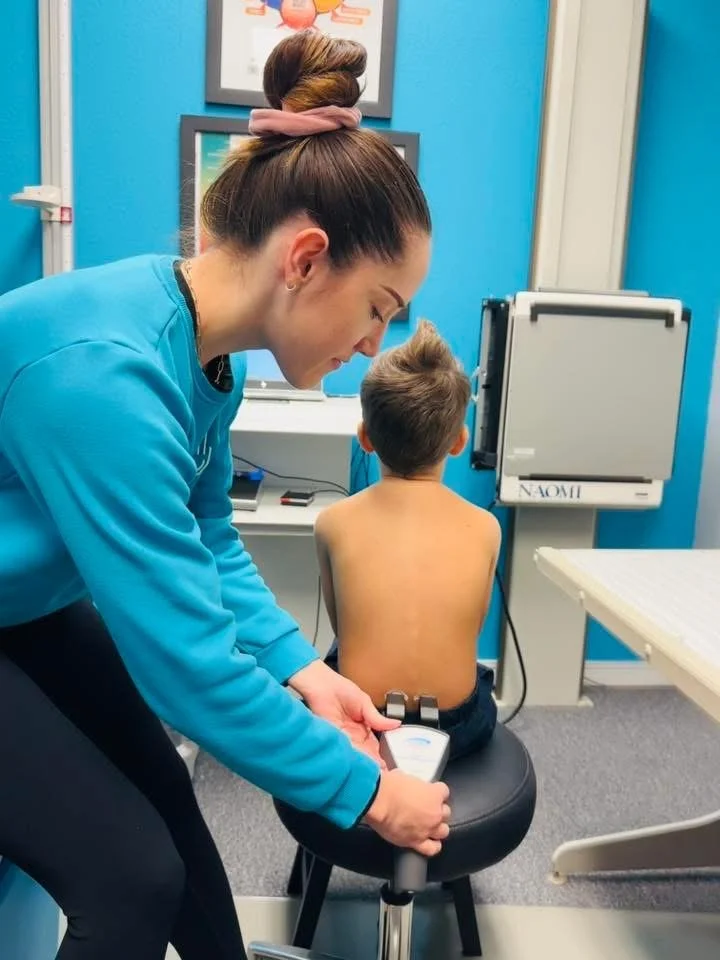
INSiGHT Scans and the Foundation of Personalized Care
When symptoms show up - pain, tension, poor sleep, digestive issues, behavioral challenges, or emotional overwhelm - most people want one thing: relief. But symptoms are rarely random. They’re signals coming from the nervous system that the body is struggling to adapt to stress.